Homeowners' guide for buying and owning property in Italy *
* The information provided on this website is for general information only and does not constitute legal advice. If you need legal advice or have questions about your particular legal situation, you should consult a licensed attorney.
Do I need a construction permit to install a skylight on my roof?
- Yes, you must obtain a construction permit to install a skylight on your roof. Failure to obtain one may...
result in an order to remove it (i.e. a demolition order) within 90 days. Particularly in areas that are subject to aesthetic or historical-preservation restrictions, the size of the skylight makes no difference if the owner fails to obtain a proper permit in advance. Bottom line: ask for permission first, not forgiveness later.
I want to buy an apartment in Italy and live there with my dog. May the condominium owners association prohibit me from keeping a pet in my apartment?
- Italian law prohibits condominium owners associations from adopting rules against keeping pets. But that doesn't mean....
that condominium owners associations can’t have any rules about pets.
Find out what they are before you bring you bring a new furry family member home or commit yourself financially to buying an apartment in Italy.
My apartment building in Italy is under renovation. If the contractor has to occupy part of my property during the renovation, am I entitled to indemnification?
- Yes, you are entitled to indemnification. The amount of the indemnification is based on ....
the degree of the occupation. Under Italian law, a property owner may not prevent a contractor from traversing or otherwise coming onto the owner’s property if it’s necessary to perform extraordinary maintenance on the building. But the property owner is entitled to indemnification for any actual damage to the property and for the temporary occupation of it. The amount of the indemnification depends on the damage to be repaired. If the property is occupied, the indemnification is the likely rental value of the occupied portion of the property for the length of the renovation.
Thieves climbed the scaffolding of a building under renovation and robbed an apartment. Is the contractor or the condominium owners association liable to the victim for damages? If the scaffolding lacked adequate security measures, the contractor and condominium owners association may be liable for negligence.
- Under Italian law, scaffolding that lacks adequate security measures....
constitutes a contributing factor to theft if the thieves used it to access the property. In that case, the contractor and condominium owners association are both liable for failing to block the access.
Contractors who use scaffolding must therefore install the necessary precautionary measures such as nighttime illumination, video-surveillance systems, electronic alarms and robust anti-intrusion netting. These protections must be included in the contract stipulated with the condominium owners associations. Last, the building administrator must verify that the contractor complies with the contract and monitor the worksite to ensure that the protections are implemented while the work is in progress.
Who pays for repairs—landlord or tenant?
- It depends.....
Repairs to rental property and who pays for them is a frequent sore spot between tenants and landlords. The general rule is that the tenant pays for minor repairs and routine maintenance while the landlord pays for major repairs and extraordinary maintenance. But which repairs are minor and which are major? And what if the repair is necessary because of unforeseeable events not directly caused by the tenant? Ordinary repairs are those occasioned by everyday wear and tear. A broken door handle, a clogged sink and a washer that needs to be replaced are examples of minor repairs that fall to the tenant because they are the result of normal use. By contrast, minor repairs caused by old age or an unforeseeable event are the landlord’s responsibility. A shutter roller belt that is worn out by everyday use is minor maintenance. But a rotted shutter that falls apart because it is old is the landlord’s responsibility. Other examples of repairs that fall to the landlord include repairing the roof, replacing a broken water heater and renovating the exteriors of windows and doors. If a landlord refuses to repair something essential to the rental property’s inhabitability, the tenant may either ask the court to force the landlord to repair the property or seek cancellation of the rental contract. But under Italian law, the tenant may not undertake the repair and then deduct the cost of it from the rent. If the source or cause of the damage to the property is unknown, the tenant is presumed liable as the custodian of the property. The tenant must prove that the cause is attributable to something or someone else to avoid liability. In addition, the tenant may not reduce or refuse to pay the rent because of a necessary repair. But if the property is temporarily partially uninhabitable because of urgently needed repairs, such as a broken pipe inside a wall, the tenant may seek a reduction in the rent if the repair work takes more than 20 days or one sixth of the lease term.
Do I need a construction permit to install a pergola with a retractable canopy?
- A pergola is an outdoor garden structure without....
a permanent roof covering that provides a framework for climbing plants. Modern versions are made of aluminum and have retractable louvers or canopies to protect against the elements. Italy’s highest court ruled that a pergola with a retractable canopy’s main purpose must be to provide shelter from the sun or the rain without creating a new, enclosed living space. A canopy that uses a manual or motorized fabric or PVC cover that rolls completely into a storage cassette (or casing) is considered retractable. By contrast, a covering that cannot be completely encased is considered fixed. The sanctions for faililng to obtain a permit for a pergola with a fixed canopy are administrative, e.g. a demolition order, and potentially penal. If you are unsure whether you need a permit for your pergola, check first with an architect or geometra.
Is a general contractor liable for serious defects in a newly constructed house?
- Yes, a general contractor (direttore dei lavori) is liable for....
negligence for construction defects, especially for complex work that requires the general contractor’s supervision. General contractors and the construction company may be held jointly and severally liable for defects that compromise the property’s inhabitability or functionality. Among these are waterproofing and sloping the roof. These elements require the general contractor’s supervision. If done incorrectly, they may cause serious defects that later jeopardise the entire building. Property owners do not have to prove the general contractor’s negligence. The burden of proof is on the general contractor to show that she or he was not at fault.
Is a building administrator who fails to report an accident that is covered by insurance liable for damages?
- When a building administrator....
becomes aware of property damage that is covered by the building’s insurance policy, the building administrator must take those steps necessary to protect the interests of the building. This includes timely reporting the damage to the insurance company, requesting reimbursement or indemnification for the damage and doing whatever paperwork other steps required by the insurance company until the matter is concluded. Failure to act with reasonable diligence constitutes a breach of the building administrator’s duty. And the building’s owners may take legal action collectively (or individually on behalf of all the owners) against the building administrator to recover the amount that the insurance would have paid less any deductible.
Does the neighbour have to clean up pine needles that fall on the street?
- A property owner with blocked drainages or slippery driveways....
caused by the needles of another property owner’s pine tree may not automatically demand damages. To prevail on a claim for damages, the property owner has to show actual danger created by the fallen pine needles that is extraordinary and unusual. Who bears the cost of cleaning up pine needles that fall on an easement, like a driveway that crosses the pine-tree owner’s property, depends on whether there is any benefit to the owner of the pine tree. If there is no direct benefit to the owner of the pine tree, then the pine tree's owner is not required to share the cost. But if the pine tree's owner does directly benefit from the clean up, the cost is shared. And each owner’s cost is calculated according to their individual share of responsibility, which may be established by a court.
The Italian senate introduces legislation to make eviction easier and faster.
- Evicting tenants in Italy will become less burdensome and faster if....
Italy passes recently introduced “house clearance” legislation. One notable change contained in the proposed law would be a reduction by half of the grace period to pay back rent after the enforcement phase of the eviction process begins. But perhaps the most significant change is the elimination of the writ of possession, which notifies the tenant of the day and time at which the landlord will retake possession of the property. The proposed law allows the judicial officer to proceed immediately after the deadline specified in the eviction order. The proposed legislation also introduces the presumption of abandonment of the tenant’s personal property when left it is inside the rental property.
Real Estate Agents in Italy
Real estate proposals
Cliffside houses overlooking the Ligurian coastline.
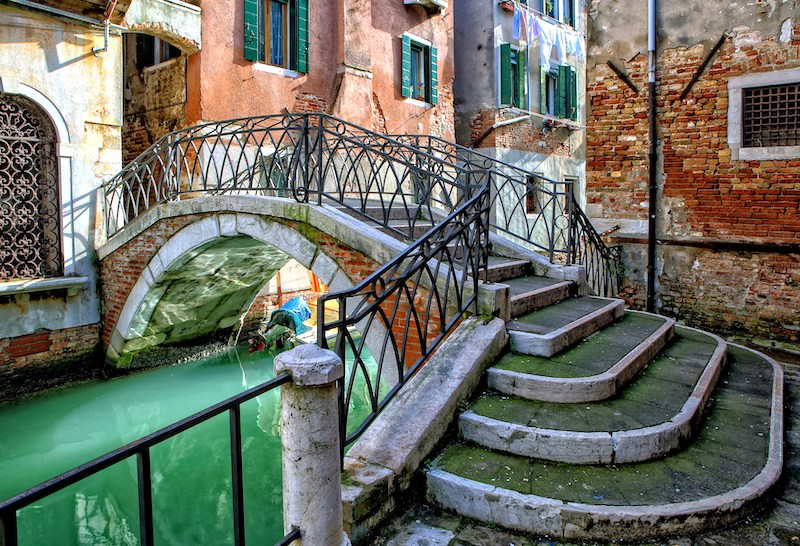
Quaint apartments in Venice overlooking the canals.
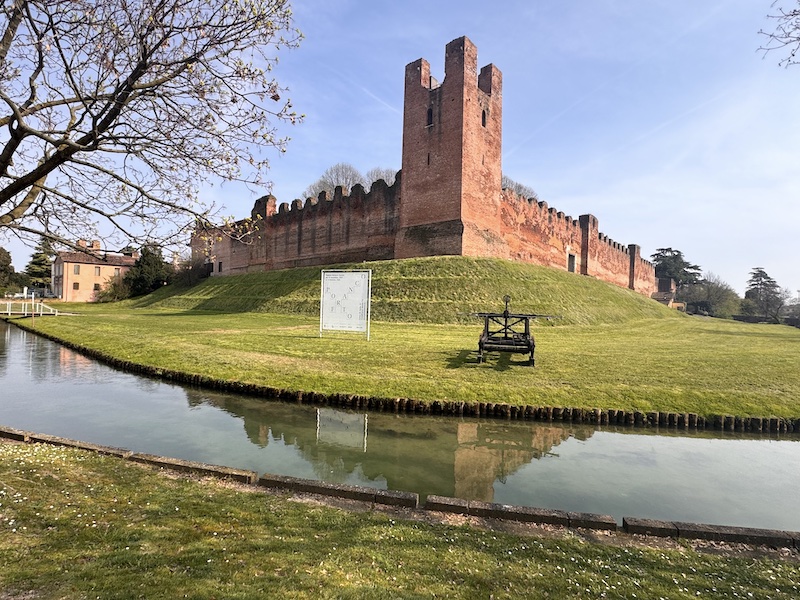
Ancient landmarks and properties for sale in medieval towns in northern Italy.
Get in touch
Feel free to phone or write me if you are interested in a property or more information about buying a home in Italy.